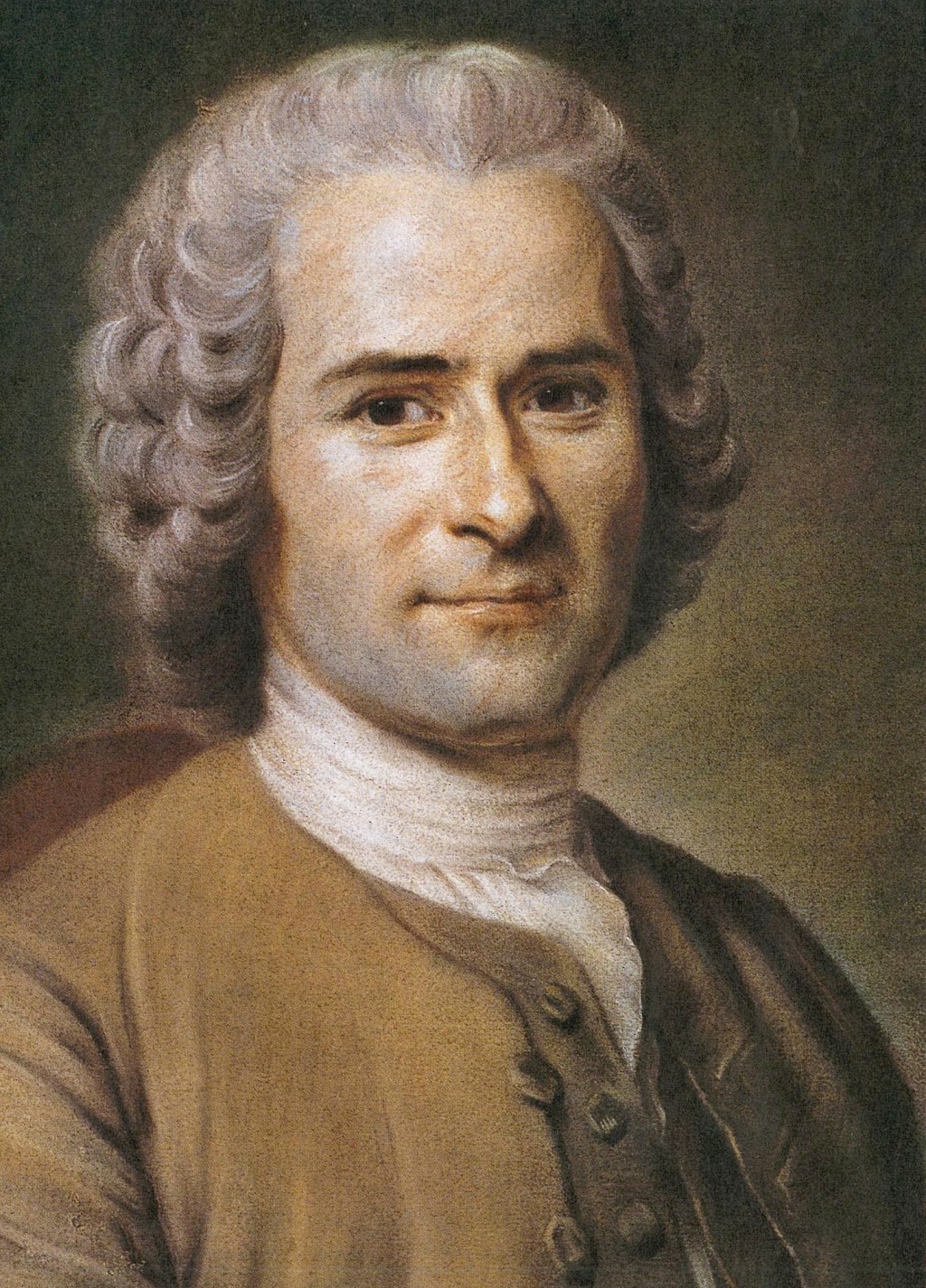
Rousseau asserts the most important aspect of government is that it fulfills the will of its people, without regard for the type of government installed. While the system of government widely thought to be needed in order to fulfill the will of the people is a democracy, this set is not necessary within Rousseau’s frame of thought. His argument raises two distinctly different but related questions. Firstly, is it possible for any system of government to truly represent the will of the people? Secondly, what does it mean to represent the general will, and is doing that possible or even beneficial to society? The necessity of a specific instillation of government has been at least slightly given more credence than it is worth, especially in western society where democracy is touted as the bastion of representative government. The effectiveness of other forms of government in adequately representing the will of the people is hard to be certain of, and largely is dependent on the character of the ruler/rulers. The second question is more clear though, as it is a question searching for an idealistic answer. It is not possible for a government to perfectly represent the will of the people, and it grows further impossible as the population of a nation increases. Rousseau is correct in stating the most important role of government, yet it is a role that is only possible in a simulated or idealistic society. As such, it fails to hold up to the national and international rigors of real government.
Rousseau, in On The Social Contract, very clearly states his view on the motivating forces of government: “…that only the general will can direct the forces of the state according to the purpose for which it was instituted, which is the common good” (Rousseau, 1983). To this effect he is entirely correct. A governing body, from any system of government is unlikely to ever pursue the common good of the land and people without the people first letting it be known what the common good actually is. This communication between the populace and the ruling class is the foundation of modern government, and the lack of communication used by rulers of the past can largely be attributed to their downfall. The executions of Charles I of England, and Louis XVI of France, with his wife Marie Antoinette, are famous examples of this. The failure to recognize the needs and will of the people led to the loss of their reign, and the end of their lives. Rousseau adds onto his thoughts on the matter however, saying,
“For if the opposition of private interests made necessary the establishment of societies, it is the accord of these same interests that made it possible. It is what these different interests have in common that forms the social bond, and, were there no point of agreement among all these interests, no society could exist.” (Rousseau, 1983)
The small problem seen in Rousseau’s thoughts here is that he assumes a group must be in opposition of private interests for there to be a desire to achieve a common good. The problem leaks from the crucial but small act of creating a government into the larger act of actually governing, when private interests are agreed upon by segments of the population. The will of the people becomes conflated as interest groups all propose differing ideas of the common good. Both a direct, and a representative form of democracy are plagued by the problem of small groups fighting against each other so that in the end nothing beneficial comes into place. The absence of the same interest groups that deter democracy however ensure the failure of rulers in monarchies, dictatorships, theocracies, and oligarchies to represent the will of the people. These problems however do not arise until a certain population precipice is reached, as a society of for example, two-hundred people may still gather all together and make a decision that does fulfill the general will.
What does it truly mean for government to represent the general will? At a most basic understanding, this would mean the government questions the populace on what it wishes to do, and then proceed to fulfill the wishes of the public. As discussed above though, this understanding is unlikely to reach a beneficial outcome. As Rousseau puts it, adhering to the general will means governmental authority and personal freedom are connected, as “…legitimate laws are founded on the general will of the citizens. In obeying the law, the individual citizen is thus only obeying himself as a member of the political community” (Murno, 2015). The process then must simply be started by the forming of laws that are given power and authority by the people, so that actions of government reflect the general will. Thomas Paine writes on this importance in Common Sense, saying,
“A government of our own is our natural right. And when a man seriously reflects on the precariousness of human affairs, he will become convinced, that it is infinitely wiser and safer, to form a constitution of our own in a cool deliberate manner, while we have it in our power, than to trust such an interesting even to time and chance. If we omit it now, some Massanello may hereafter arise, who laying hold of popular disquietudes, may collect together the desperate and discontented, and by assuming to themselves the powers of government, may sweep away the liberties of the continent like a deluge” (Paine, 1776).
Paine’s comments show the value of the public maintaining control over its own destiny, so that the general will may still hold sway over the actions of the ruling body. The original intent of man creating government was to ensure the preservation and protection of rights that he could not preserve or protect himself, so a governing body maintaining those key acts preserves the general will. If that, as the common good, is communicated by the public to government, then rulers adhering to the will of the public can only be of benefit to both sides. Problems arise when populations begin to seek more than was originally intended, and when government seeks to act in manners the public has not requested.
Works Cited
Murno, A. (2015). General will. In Encyclopædia Britannica. Retrieved from
http://www.britannica.com/topic/general-will
Rousseau, J., & Cress, D. A. (1983). On the social contract ; Discourse on the origin of
inequality ; Discourse on political economy. Indianapolis: Hackett Pub.
Paine, T., & Kramnick, I. (1986). Common sense. Harmondsworth Middlesex,
England: Penguin Books.
 1836
1836 