
This is a ranking of the United States Presidents, and the judgements made are purely my own. This means my reasons and ultimate rankings have the potential to be most agreeable, or most hated. Feel about them how you may, but think about them first. I also reserve the right to judge these great men on the whole of their lives, not just the time they spent in the Oval Office.
Also, I essentially have ranked the actions of these men in terms of who did the most good, to who screwed up the least, down to who screwed up the most.
1 George Washington (1789-1797)
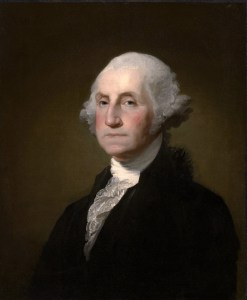
Stepped down when he could have held onto power, advocated a no party system, had no desire to be involved in foreign affairs or wars, was revered as a great man by many of the greatest men in the history of the country, led the country to victory in the Revolutionary War. Signed into law the Coinage Act, creating the US Mint, put down the Whiskey Rebellion (literally by getting on his horse in military uniform as the sitting president to face the rebels), signed the Judiciary act, creating the Federal Judiciary, was unanimously elected both terms. He set the standard by which all future leaders would be judged.
2 Abraham Lincoln (1861-1865)

Reunited the nation literally by winning the Civil War, freed the slaves, stood up for what he knew to be the right path for the country, paved the way for the 13th, 14th, and 15th constitutional amendments. Kept European powers out of the civil war, keeping control of America’s destiny in our own hands. He did all of this in one and a quarter terms as president before being assassinated, and the greatest question left is how much differently would reconstruction have gone if he had lived?
3 Teddy Roosevelt (1901-1909)

Secured the greatness of the national parks, fixed the problems set forth in The Jungle regarding food and sanitation, recreated the image of the Strong and Powerful United States, didn’t voluntarily step down when he knew he was the best man to lead the nation. Fought the monopolies and regulated business, ordered and made possible the Panama Canal, awarded the Nobel Peace prize for ending the Russo-Japanese War.
4 Thomas Jefferson (1801-1809)

Greatest impact as President is probably being the idol and role model of three of the next four presidents, with the exception being John Quincy Adams. This created the largest political dynasty in American history. He essentially doubled the size of the United States with one move in the Louisiana Purchase from France, and ended the attacks on US merchant ships by barbary pirates with the new nations first war (The First Barbary War). Can’t forget to mention his role in the revolutionary US, and his authorship of the Declaration of Independence.
5 Dwight D. Eisenhower (1953-1961)
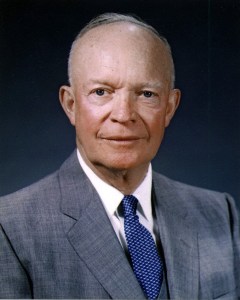
Perfect example of transitioning military tactics and logic into the civil arena, he founded NASA, saw to the end of the Korean war, established the Interstate Highway System, created the Defense Advanced Research Projects Agency, which would later be largely responsible for the creation of the internet. He played a major role in education reform, and followed through on civil rights legislation by using the military to enforce it. Also created the idea of nuclear deterrence, using the treat of nuclear warfare to end the war in Korea and as a reason to cut spending on classic military forces. Listing his achievements in office, and successes as a military commander before the presidency could go on for a very long time.
6 Harry Truman (1945-1953)

When he came into the office after FDR’s unexpected death, no-one thought very highly of him, yet he proved his ability and deserves immense respect. FDR had essentially seen to the end of WWII in Europe, but Truman had to end the war in the Pacific. He had the guts to make the decision to drop the bombs on Japan in 1945, saving millions of American lives, introduced the Truman Doctrine to contain communism, stood his ground against General Douglas MacArthur in the Korean war, supported civil rights during all this, oversaw the Marshall plan to rebuild Europe after WWII, and founded NATO.
7 Ronald Reagan (1981-1989)

The Gipper is best known for two things; his career as an actor before getting into politics, and the famous speech to Russian President Mikhail Gorbachov ordering him to tear down the Berlin Wall. Doing much more than that however, he domestically reduced taxes to rebuild the national economy, and controlled the money supply to reduce inflation. These were part of the Trickle Down or Reaganomics movements. He oversaw the end of the Cold war, and the fall of communism in the Soviet Union and eastern Europe. He also initiated the hardline approach to narcotics with the War on Drugs, which has proved to have the exact opposite effect on the illegal drug world over the last thirty years. His actions in office were hardly perfect, but he was still a great president, and left office with a 68% approval rating, matching FDR and Bill Clinton for the highest rating for a departing president in the modern era.
8 James K. Polk (1845-1849)

If for no other reason than the fact that while in office he met every single major domestic and foreign policy goal he set during his campaign process, Polk should be one of the most appreciated presidents. He negotiated for the Oregon territory with Great Britain, easily won the Mexican-American war which gave the US the present day states of Nevada, California, Utah, New Mexico, Colorado, most of Arizona, parts of Oklahoma, Kansas, Wyoming, and the reason the conflict started: Texas. He also helped establish the United States Naval Academy, the Smithsonian Institute, saw the groundbreaking of the Washington monument, and the issue of the first US postal stamps. Taking on Mexico on the battlefield also was responsible for the training and battle field experience of nearly every single major military leader in the Civil War. He accomplished far more in his single term as president than most presidents do with two terms.
9 James Madison (1809-1817)
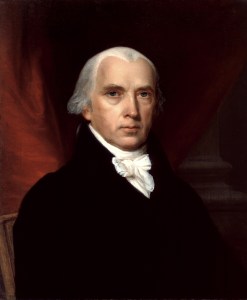
His greatest contributions to the country largely came before his presidency, as he was one of the crucial men involved with forming the country after the revolution (like authoring the Constitution and the Bill of Rights). If it were purely a ranking of life accomplishments, Madison would outrank Monroe. As president, he largely is known for leading the country into the War of 1812, which was won, but served as a great hardship for Madison’s administration. Madison had to overcome an extremely lessened military force, and a near lack of finances to win the war. His sheer ability as a politician is a large reason for his high rank.
10 James Monroe (1817-1825)
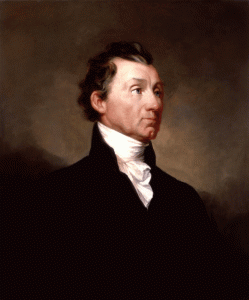
Greatest move was the Monroe doctrine of 1823, which announced to the world American opposition to any European involvement in South America. It basically said we can handle the western hemisphere of the globe, and everyone else can deal with their own problems. He also acquired the state of Florida from Spain, and diplomatically prevented a war with Spain over the territory of Florida after General Andrew Jackson invaded it without orders to do so. His tenure as president didn’t have a ton of flash, but he did see to the expansion of the country through multiple treaties and was generally well received by the public, winning his first election with over 80 percent of the vote and nearly unanimously winning reelection.
11 Franklin D. Roosevelt (1933-1945)
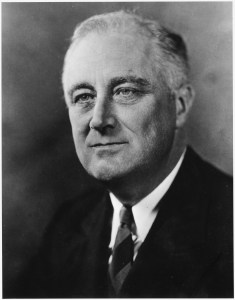
FDR is a man to be admired, and as a man I would rank him higher on this list. He is only this low because his New Deal policies are often overrated, and I feel they are largely responsible for the beginning of the age of entitlement now seen in the American population. He overcame the loss of the use of his legs due to Polio to become the longest serving President in the history of the country, being elected to four terms, and serving three and a quarter of those before his untimely death. He did what he had to do to get the country out of the depression, and his powerful ability to get things done is maybe second only to Lincoln. He held together the winning alliance in WWII with Great Britain and communist Russia, and largely saw to the United States becoming a legitimate world power, only rivaled by the USSR. Many historians look back on FDR and rank him among the top three men to ever hold the office.
12 John Adams (1797-1801)

Our second president resides this high on the list due to his role as essentially the father of the US Navy. He was a paranoid man who thirsted for power and recognition for his great mind and ability. His lack of recognition by his peers, especially during two terms as Vice President to George Washington built up his lack of trust in those around him and led to great opposition from both Jeffersonian Republicans, and his own party during his one term as President. He did play a pivotal role in the foundation of this country though, and that cannot be forgotten.
13 William McKinley (1897-1901)
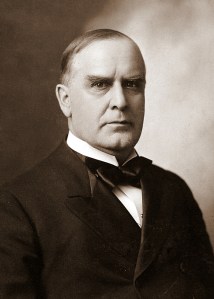
McKinley was assassinated just six months into his second term as president (which opened the door to Teddy Roosevelt so not that terrible of a loss), but his first term was still very successful. He led the nation to a victory in the Spanish-American war, which granted independence to Cuba, and handed over Puerto Rico, Guam, and the Philippines to US control. In another territorial gain, Hawaii was also annexed under his watch. He was fantastic for economic growth, suppressing inflation proposals and securing the passage of the Gold Standard Act. He also promoted the Dingley Tariff act which protected American workers from foreign competition. He should be historically viewed much more positively than he is.
14 John Quincy Adams (1825-1829)
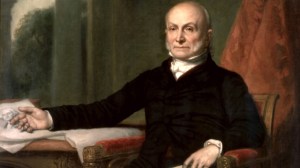
His role is service to the country was mainly as a diplomat and as secretary or state; a role he was one of the best in compared to anyone else in history. While president though he did manage to pay off all national debt, which should be greatly admired especially considering the state of national debt today. He was very smart, and extremely well educated, and tried to use that knowledge to modernize the education system and the economy. He however failed at that due to a congress that was in opposition to him his entire tenure.
15 Calvin Coolidge (1923-1929)

Coolidge was the right man for the time that he was president, embodying the spirit of the middle class during the biggest economic boom the country had ever seen. He is also benefited greatly by the failed administrations that surround him, with Harding before him being a historically poor president, and Hoover after him entirely failing to stem the tide of the 1929 stock market crash and ensuing Great Depression. Fought for workers rights in a time of massive economic growth, and managed well that boom of the roaring twenties.
16 Andrew Jackson (1829-1837)

Most famous for politically for signing into law the Indian Removal act, which moved multiple native American tribes out of Florida to the current Indian reservations in Oklahoma, and resulted in the deaths of thousands on native Americans on the Trail of Tears. His presidency takes a major hit for the way that bill was implemented. He also failed to buy Texas from Mexico and failed to establish foreign trade with China and Japan. Jackson did however, work hard to keep the Union together, as he responded to South Carolina’s threat to secede by denying a states right to secede, and threatening military action to keep the state from withdrawing. He almost never did the easiest thing, or the most popular thing, but he had the will to do what needed to be done at all times.
17 Woodrow Wilson (1913-1921)

Wilson drops on my list due to his role in implementing the federal income tax that Taft passed into law, and for the fact that his physical condition late in his second term was masked by his wife and physician, with it being widely speculated that the first lady was the one truly in charge of the country during that time. He also was largely responsible for the Espionage act of 1917, and the Sedition act of 1918, which suppressed anti-draft activists and essentially led to the First Red Scare coming into the 1920s. Wilson did accomplish quite a bit though, the biggest likely being the passage of the 19th Amendment, which granted women the right to vote. He also kept the US out of WWI until we had to get involved, choosing instead to focus military efforts on the Mexican civil war, and to putting an end to Pancho Villa’s raids.
18 George H.W. Bush (1989-1993)

Big Bush ran an office that won favor largely off the military involvements in Panama (lasted two months) and the Persian Gulf (the Gulf War, which lasted six months), and things that had already long been coming, like the fall of the Berlin Wall in 1989 and the official dissolution of the Soviet Union in 1991. He failed in the eyes of the public to resurrect the weak economy after the recession in the late 1980s and early 1990s, although during the fiscal quarter of the election the market had already turned. He did go back on his word (“No new taxes!”) when he signed into law a tax raise in 1990. The continued perceived economic issues and the most successful third party candidate in recent memory(Ross Perot took 19% of the vote) led to his loss to Clinton in the 1992 election. The fact that he only had one term and sits after such a towering President from his own party often lead him to be historically overlooked but he was an incredible statesman.
19 William Howard Taft (1909-1913)

Taft’s term as president can best be remembered by its ability to get things done, and lack of ability to work the political game. Taft followed directly after Teddy Roosevelt, and continued his work of checking big business and ‘trust-busting’, but quickly moved away from the growing progressive or liberal sect of the Republican party that had followed Roosevelt. In doing so, he fractured the party and essentially alienated all sides against him. He also is responsible for the creation and passing of the previously mentioned 16th amendment, which created the federal income tax, without the need for that tax to be apportioned back to the regions taxed. Taft used his tenure in the oval office to greatly expand the powers of the federal government.
20 James Garfield (1881)
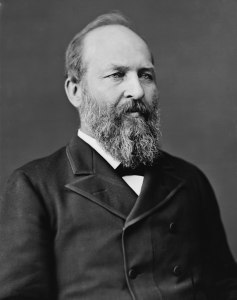
Garfield is another story of presidential potential, as he got into office and immediately got to work, but was assassinated after only two-hundred days in office. He worked to strengthen and modernize the American Navy, with his plans being continued more modestly by his successor Chester A. Arthur, he strengthened the office of the president by taking more control of executive appointments, and sought to remove corruption from the US Post office. He also was big on civil reform, and civil rights for African Americans. He had big plans for the country during his presidency and it is a shame they were never able to fully come to fruition due to his death.
21 Chester Arthur (1881-1885)

Arthur rose to the office only after Garfield’s death, and didn’t truly seek reelection after his first term ended, due to his poor health (term ended March, 1885 and Arthur died November, 1886). His biggest success was the Pendleton Civil Service Reform Act, which made government jobs be dependent on merit, rather than political or personal alliances. While this bill was started by Garfield, Arthur took charge of not only its passing, but the implementation and enforcement of it, showing his own political strength. This was also a surprising path by Arthur, as his political career before his presidency showed he was not a reformist, and his selection as vice president was meant mainly to balance out Garfield’s reformer platform. That is all to say that Arthur put aside his own political history when he entered the office and accomplished what needed to be done, rather than simply what was expected of him. For that he should be commended.
22 Grover Cleveland (1885-1889, 1893-1897)
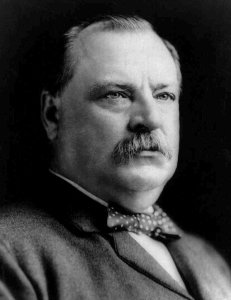
Cleveland was one of the last true conservative democrats, coming in the years before the party platforms reversed. Respect for his presidency comes largely due to what he tried to do, and not for what he was actually able to accomplish. His failure to meet expectations however may be at least somewhat attributed to his non-consecutive terms in office, since that surely hindered his political momentum. He greatly favored fiscal conservatism, isolationism, the Gold Standard, low taxes and tariffs, a stable economy without inflation, and was opposed to government subsidies of almost any kind to businesses or individuals. He was an honest man and politician, who was well respected for his character. The only president to win the popular vote more times than Cleveland(3), is FDR, who won it four times. He was the type of man an electorate would never regret trusting to office.
23 Bill Clinton (1993-2001)

He was able to have literally every single person in the country know that he had an affair with Monica Lewinsky, lie about it in front of a grand jury, and still serve out the remainder of his term. His memory in American history books will greatly be benefited by his popularity as the cool president. He managed to pass welfare reform, and rode the wave of a steady economy that was largely propped up by booming dot com companies. He was a great orator, and could play well the political game, but in the end didn’t actually accomplish that much.
24 Lyndon B. Johnson (1963-1969)
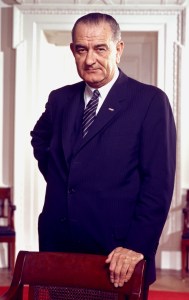
LBJ succeeded Kennedy after his assassination, and came into office at a time when if he could handle the national and international stage well, he could have been considered one of the greatest men to have been president. He successfully navigated national affairs, with his sweeping civil reforms and civil rights legislation. His work in that area is possibly only behind Lincoln in terms of impact and scope. He failed miserably however on the international field, with his escalation of the Vietnam War, and subsequent loss of priority of the war leading to his downfall as president. The reaction the US involvement in Vietnam largely led to Johnson’s 36% approval rating when he announced he would not run for reelection in 1968.
25 Benjamin Harrison (1889-1893)
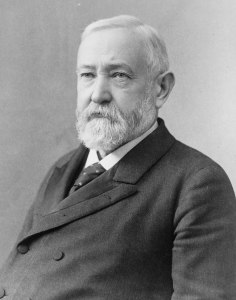
He came into office in-between Grover Cleveland’s two terms and basically did exactly the opposite of Cleveland. He sought to use extreme tariffs on imports to protect US business against foreign competition, raising tax rates on such products to nearly fifty percent. That move led to high revenues for the federal government and the first ever time the government spent over a billion dollars in a year. He passed the Sherman Anti Trust act, which prohibits business actions that can be deemed anti-competition, and has been used to prevent monopolies since. He also crated the ability to have National Forests, something that Teddy Roosevelt built upon greatly during his presidency. He actually was able to do a lot of good during in one term, but the increased taxes, heavy spending, and popularity of Cleveland led to failed attempt at a second term.
26 John F. Kennedy (1961-1963)

While viewed favorably by most historians, and seen as the greatest example of a “what could have been” president, JFK was really a middle of the road commander in chief, with his focus on an American presence in space being the highlight of his tenure. Under his watch, the US began sending more and more troops into Vietnam (which LBJ increased even more after Kennedy’s death), the Berlin Wall was built, and civil rights tensions only intensified (with JFK’s slow pace to deal with the problem not helping the cause). The Bay of Pigs incident occurred in Cuba, leading to the Cuban Missile Crisis, in which the US narrowly navigated away from all out nuclear war with the Soviet Union. While he may have gone on to live up to his perceived potential if he had not been assassinated, his time actually served does not point to that being the case.
27 Ulysses S. Grant (1869-1877)
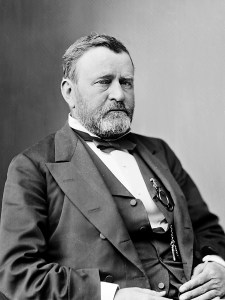
His two terms as president are often remembered more for corruption than the good things he accomplished, and while his accomplishments should earn him a higher spot on this list, his protection of his corrupt allies brings him down. He fought for civil rights and to protect the citizenship of African Americans, and sought to quell Confederate nationalism in the south, so as to reunite the country in spirit as well as in law. During his first term, regaining Republican influence in the south, with support and the election of African Americans being a central pillar, was a successful endeavor. That success however did not continue into his second term, as confederate minded politicians retook office and disallowed the black vote. This, combined with the investigations into corruption and his lackluster response to the economic depression of the mid 1870s led to his failure to receive a party nomination to run for a third term in 1880.
28 Rutherford B. Hayes (1877-1881)

Hayes was brought into office in one of the most controversial elections ever held in this country. He lost the popular vote, but won the electoral college vote when his opposition party made a deal to give him the contested votes he needed to win as long as he ended all military involvement in the south. That decision ended Reconstruction in the south, and led to the continued oppression of blacks by southern states. He was however greatly in favor of equal treatment for all people, regardless of race, and worked toward civil reforms that were largely put into place after his presidency. He also used federal troops to end the Great Railroad Strike of 1877, effectively siding the federal government with the business owners against the workers. His progressive stances on civil reforms earn him a higher spot than the rest of his political actions would otherwise merit.
29 Martin Van Buren (1837-1841)
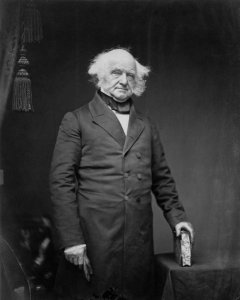
Van Buren was not able to do hardly anything positive during his time as president, and is mostly looked at negatively for his time in office. His place on this list is greatly helped however because after his presidency, he continued to work in politics and played a big role in the development of the democratic party and its overall dominance during the Second Party System over the Whig party. He is blamed for the economic crash of 1837, and had no desire to annex Texas into the US, both of which doom his historical rank.
30 Richard Nixon (1969-1974)

Nixon’s presidency, and legacy as a whole, will forever be tarnished for the Watergate scandal, even if he actually was a decent president. He ended the war in Vietnam, brought back American POWs and ceased the draft. He famously visited and opened up trade relations with China, and had successful negotiations with the Soviet Union to limit ballistic missile facilities in the two countries. He was an advocate of returning power to the states from the federal government, although most of what he wanted to have passed was rejected by Congress. His first term was a great success, and he won reelection overwhelmingly for a second term before his crimes around Watergate led to his resignation with a certain impeachment being his only other option. In the end, Nixon’s paranoia simply got the better of him, and ruined his political career.
31 Zachary Taylor (1849-1850)

Taylor was a great military man, serving for forty-one years and attaining the rank of Major General before his election to president. Sadly, his success in the Army did not translate to the oval office, where his only real contribution was setting in motion what would be the Compromise of 1850, which settled the slave debate for much of the land acquired in the Mexican-American war. His legend is at least partially able to endure due to the fact that he didn’t make the national division over slavery any worse before he died.
32 Warren Harding (1921-1923)

Harding is said to have been convinced to run for president because his future campaign manager looked at him and thought the man just looked like he should be president. He wasn’t a great leader or statesman, but he came to power at a time when the country was booming, and as such he died in office as one of the most popular presidents in history. The mass corruption that has later been revealed in his administration however has severely diminished his place in history, and now he is consistently ranked among the worst presidents. For context, Teapot Dome, which was a massive bribing incident by men in Harding’s cabinet involving naval oil supplies, was ranked as the biggest presidential scandal in US history until Watergate. The best thing he has going for him is that he was incredibly fiscally responsible.
33 Gerald Ford (1974-1977)

Ford is the man said to have been appointed by Nixon to be his VP simply because Nixon believed there was no possibility of him being impeached with Ford being next in line to the presidency. He served less than three full years after coming into the office following Nixon’s resignation, which is the shortest time served for any president who didn’t die in office. His historical legacy will forever be that of a glorified place holder until the next election came around. During his short tenure, congress seized power in both the domestic and international arena away from the executive branch, limiting what the president could do. He is most famous for pardoning Nixon, Robert E. Lee, and for falling down.
34 William Henry Harrison (March 4, 1841-April 4, 1841)
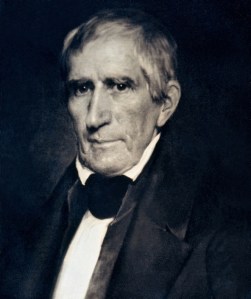
The grandfather of Benjamin Harrison, William Henry Harrison was the first president to die in office. One month into office to be exact. His list of achievements as president starts and ends right there. If there is one basic duty of the presidency, it is to stay alive. Harrison is this high on the list because he wasn’t able to do anything negative in office.
35 Herbert Hoover (1929-1933)

Hoover was one of the wealthiest men in the country when he was elected president in 1929, as he had proven his ability in the private business side of the economy. His success did not transfer over into the public side however, has he was wholly unable to avert, or even slow down the great depression after the 1929 stock market crash. It could be said that his presidency was doomed from the start after such a watershed event, but his inability to fix the problem is what dooms his legacy. His solution to the depression was to promote small public works projects, such as starting the Hoover Dam that FDR finished, and to hike up tax rates substantially. The top tax bracket under Hoover went from 25% to 63%. With this and the corporate taxes he implemented, unemployment rose to roughly 25%. His presidency virtually ensured the election of FDR.
36 Jimmy Carter (1977-1981)
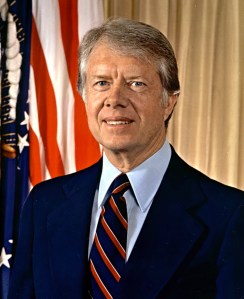
The easiest way to understand Carter’s place in presidential history is to know that when he ran for a second term, he lost 44 out of the 50 states to Ronald Reagan, a man whose only political experience had been as Governor of California for two terms from 1967-1975. His term ended with the Iran Hostage Crisis when over sixty Americans were held hostage for 444 days, the 1979 Energy Crisis when the Iranian revolution led to a massive cut in oil production (and a mass panic), and the Soviet invasion of Afghanistan.
37 George W. Bush (2001-2009)
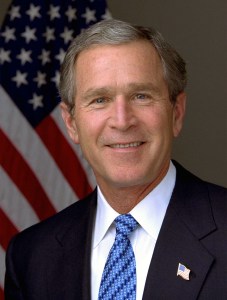
W’s presidency was doomed by the controversy surrounding his initial election (recount in Florida; hanging chad anyone?), by the tragic attacks on September 11, 2001, and mostly by the handling of the Iraq and Afghanistan wars that followed the 9/11 attacks. He also supported the Patriot Act in the wake of those attacks, which is likely the most invasive bill ever authored in the US, and is the reason why the NSA has been able to garner the power to spy on any American citizen over the last fifteen years. Also, let us not forget the mishandling of relief for Hurricane Katrina victims in 2005. Under his watch, the US also entered into the longest recession since WWII in 2007. Bush is slightly vindicated by the fact that chemical WMDs actually have been found in Iraq, the previous lack of which had been a gigantic criticism for why US troops were truly sent into the country.
38 John Tyler (1841-1845)

Tyler is the man who had the good fortune of taking office after the unexpected death of William Henry Harrison, and as such was the first man to be president without ever being elected to the position. Soon after he enter the white house he decided the Whig(his own party) platform held many unconstitutional views, and proceeded to veto bill after bill presented by the Whig Party. This lead to most of his cabinet resigning, and his party expelling him. As someone who couldn’t support his own party, he wasn’t able to receive support from the Democratic Party either, leading to an inability to get anything done domestically. He then focused his attentions elsewhere, on the annexation of Texas, which he spent two years on without actually being able to get it done. His lovely nickname became “His Accidency”.
39 Barack Obama (2009-2017)

Our current president is still hard to judge given that he still has a full year left in office, not to mention that his policies have yet to be judged in a retrospective view, and that should be remembered when ranking him historically. For now however, Obama has sought, and failed to resurrect the economy that seven years later is still blamed on the Bush administration; he has not been able to unite the nation at all amid renewed and violent racial relations (instead things have only gotten worse and worse); he pulled out of Iraq too early, leading to the formation of ISIS, and still hasn’t gotten troops out of Afghanistan. He also has consistently used tragic events to further a political agenda, mentioning “common sense gun laws” directly after every single mass shooting. The effects of his Affordable Care Act have still not fully been seen, although the legislation will likely be fought heavily when the executive office likely switches party in the next election. He does have going for him the partial legalization of Marajuana(legal in some states but not federally), and same-sex marriage(legal federally but fought by the states).
40 Millard Fillmore (1850-1853)

He was the last president not associated with either the Republican or Democratic parties, and was the only Whig president to either not die in office(Harrison, Taylor) or be expelled(Tyler). That is essentially Fillmore’s place in history as president. He also did nothing to help the growing tensions surrounding slavery, actually widening the gap as he moderately helped both sides with the Compromise of 1850. He also looks quite a bit like an old Alec Baldwin.
41 Franklin Pierce (1853-1857)

It should be noted that the three presidents leading up to the Civil War (Fillmore, Pierce, and Buchanan) are all ranked very close to the bottom of every historical ranking virtually ever made. Pierce decided to support the Kansas-Nebraska act, which allowed the citizens of the new states to actually vote if they wanted to be a slave or non-slave state, leading radicals on both sides to swarm to the territories and vote their side. The influx of tension led to a bloody battle of civilians that killed roughly seventy people, and left approximately one-hundred more injured. Pierce also enforced the Fugitive Slave act that mandated an escaped slave be brought back to his/her owner, even if the slave escaped to a free state. Pierce either was inept, or simply didn’t care that his actions were only pushing the country toward civil war.
42 James Buchanan (1857-1861)

Buchanan was subjectively, and objectively one of the worst presidents of all time. Firstly, he shouldn’t even have been elected to preside over a country on the brink of war when he had been in London during almost all of Pierce’s presidency. He wasn’t even tuned into the conflicts that were actually going on. What really screws him though is that he apparently had no political thought of his own, following only the laws that were already in place no matter what side they fell on. When commenting on the possibility of secession, he stated that he viewed it as illegal, but that to use force to stop it would also be illegal, basically saying he wasn’t going to do anything about the problem other than sit on his ass. Also, probably because he had no determination to do anything at all, he is the only president ever to remain a bachelor for his entire life.
43 Andrew Johnson (1865-1869)

The only reason Johnson ranks last instead of Buchanan, is that rather than just doing nothing and letting the national problem fester, Johnson found a way to make sure race relations in the US continued to be a problem for another century. He basically was in favor of allowing the southern states back into the union and acting like nothing had ever happened to divide the country at all. He wanted southern states to hold their normal elections and when those states voted back in the same people that had been in power leading up to the war, and instituted oppressive Black Codes and congress refused to honor their elections, Johnson vetoed the congressional actions. He became so at odds with congress that they impeached him, mainly just to move on with an actually effective reconstruction.
 1836
1836 